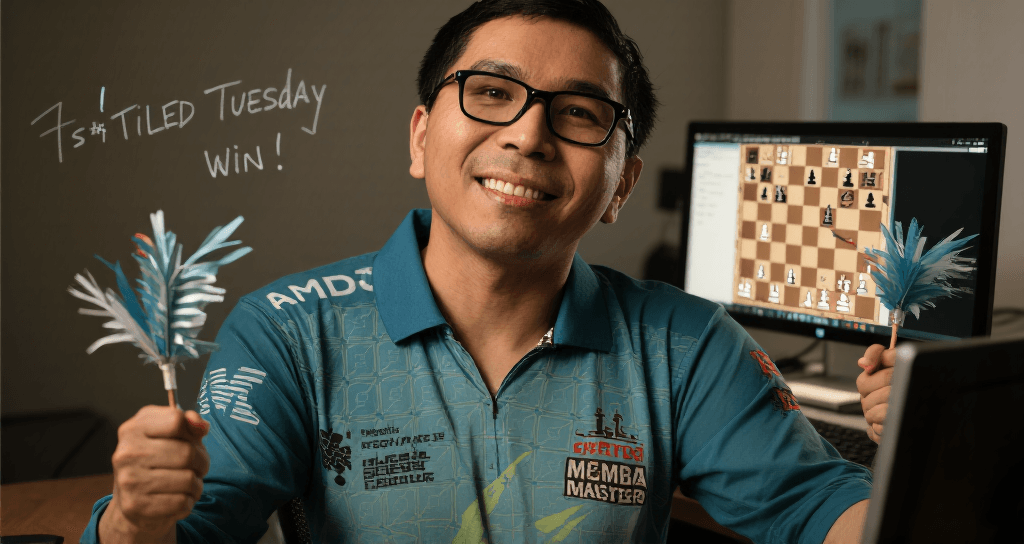
Wesley So’s latest Titled Tuesday win is the kind of chess story that looks simple at the top and gets more useful the longer you sit with it. On September 29, 2026, So started 7/7, finished on 9.5 points, and took first after the top boards in the final round all drew. Chess.com’s recap also notes that this was his first Titled Tuesday win of the year and his fifth in 75 attempts overall, which is a reminder that elite blitz success is not just about flashes of brilliance. It is about repeatable habits.
That matters for intermediate players. Most players at this level already know how to calculate a tactic or memorize a few opening lines. The gap is usually elsewhere: deciding faster, choosing lower-friction openings, recognizing when to trade, and staying calm when the position gets ugly. So’s run through a field full of titled players is a good model because it shows what strong blitz actually rewards. It is not nonstop chaos. It is controlled decision-making under pressure.
If you want the source, start with the Chess.com report here: So wins Titled Tuesday September 29, 2026.
1) Why this win matters for intermediate players
A lot of blitz advice is built around speed for speed’s sake. Move fast, flag your opponent, and hope the tactics work out. That can win games, but it does not scale very well. So’s result shows a better version of blitz: use your prep to buy time, then use that time to make cleaner decisions.
The important detail in the recap is not just the final score. It is the way the event developed. So was perfect early, stayed near the top through the middle rounds, and then kept finding stable paths when the standings tightened. That is what good blitz players do. They do not try to win every position on the board. They try to keep the game in a range where they can still think clearly.
For intermediate players, that means the goal is not to imitate grandmaster tactics. It is to reduce decision load. If the first 10 to 12 moves are familiar, the rest of the game gets easier. If the structure is familiar, you can spend your clock on the real questions instead of reconstructing your opening from memory.
2) Build openings you can play fast, not just openings you can study
Blitz punishes “almost-prepared” openings. If you know a line well enough to survive the main variation but not well enough to answer the first sidestep, you end up spending time in the exact place where your opponent wants you to burn it.
That is why opening prep for blitz should focus on structures, not just move sequences. You want openings that give you:
- a clear development plan
- a stable king-safety plan
- a few common pawn structures you see again and again
- move-order knowledge for the first tricky branch
If you play a narrow repertoire, those features show up faster. If you play a broad repertoire, you need a different kind of prep: more pattern recognition, less memorization. Either way, the point is the same. Good blitz openings make your early decisions boring.
If you need a place to study those patterns, use our opening explorer and compare it with the free chess explorer. The more positions you recognize on sight, the less likely you are to drift into a bad time scramble before move 15.
3) Stop memorizing only the “best move” and start memorizing the follow-up plan
Intermediate players often study openings by asking one question: what is the engine move here? That helps, but it is not enough for blitz. In a fast game, you also need to know what happens after the engine move.
Ask three practical questions for every opening line you study:
- What is my next move if the opponent follows the main line?
- What is my plan if the opponent sidesteps with an offbeat move?
- Which piece is the problem piece in this structure?
That third question matters more than people think. In blitz, you do not have time to re-evaluate your whole position every move. You need a default plan. In many openings, the default plan is simple: develop the weak piece, castle, and finish your minor-piece coordination before you start hunting tactics.
This is where a tool like the free chess engine helps. Use it to check whether your intended plan is actually sound. Then move the lesson from “best move” to “best plan.” That shift saves more clock time than memorizing another random branch.
4) Make your early middlegame decisions on purpose
One reason So’s results stand out is that he does not seem to waste much energy on positions that are still “about development.” He gets to the part of the game where the position has a shape, then he makes decisions based on that shape.
That is a skill intermediate players can copy. Too many blitz games are lost because the player keeps asking abstract questions too late:
- Should I trade queens now?
- Should I attack the king or improve the knight?
- Should I push this pawn or keep the structure?
The answer usually depends on what your opening gave you. If you know your structure, you already know the likely answer. A kingside attack opening wants different decisions from a quiet queen’s pawn line. A closed structure wants different decisions from an open center. The earlier you identify the structure, the fewer “maybe” moves you make.
A simple rule helps: by move 10, you should be able to say in one sentence what your position wants. If you cannot say it, you probably do not understand the opening well enough for blitz yet.
5) Time management is not a separate skill. It is part of decision quality.
Blitz players often talk about time management as if it is detached from chess skill. It is not. Good time usage comes from good move selection. If you make fewer undecidable choices, your clock stays healthy.
So’s Titled Tuesday run is a useful example because he stayed in control even as the event got sharper in the later rounds. That is what intermediate players should aim for: not a perfect clock, just a usable one. The difference between 20 seconds and 2 minutes is huge, but the difference between 2 minutes and 30 seconds is often about whether you spent time on the right questions earlier.
Try this in your own games:
- spend time only on forcing moves, critical trades, and king safety
- if a move is obvious, play it and save your calculation for the next fork in the road
- if you are already worse on the clock, simplify your position before you simplify your move list
That last point is subtle. In blitz, simplification is best when it reduces both chess complexity and decision complexity.
6) Train the positions you actually reach
One underrated takeaway from elite blitz is that endgame comfort still matters. Many players think blitz is all about the opening and tactics. But the late middlegame and simplified endgame are where a lot of points get decided, especially in fields full of titled players.
That is why one of the best habits you can copy from elite players is structured endgame practice. Not endless theory. Just enough familiarity that you can convert when the board gets quiet. If you want that kind of practice, use our endgame trainer and then test the patterns against the free chess engine.
A practical loop looks like this:
- play one blitz game
- save the first moment you felt unsure
- identify whether the problem was opening prep, middlegame planning, or endgame technique
- repeat the same structure until the decision becomes automatic
That loop turns “I was lost in the game” into a specific fix.
7) A simple weekly blitz routine for intermediate players
If you want to copy the habits behind a result like So’s, do not start with grandmaster-level study volume. Start with a small system you can repeat.
Use this weekly loop:
- Pick one white opening and one black defense.
- Review the first 10 moves in each until you can explain the plan out loud.
- Play five blitz games from those structures.
- Review only the first critical decision in each game.
- Spend one session on rook endgames or simplified piece endings.
If you want extra reps, play against chess bots or browse recurring structures in the opening explorer. The goal is not volume. The goal is faster recognition.
After a few weeks, you will notice the real benefit: the opening phase feels less like improvisation and more like entering a familiar room. That is the same feeling strong blitz players create for themselves.
Bottom line
Wesley So’s Titled Tuesday win is not a lesson in brilliance-only chess. It is a lesson in useful habits: solid prep, quick structural decisions, and enough endgame comfort to keep converting when the game gets messy. For intermediate players, that is the real blueprint.
Do not try to copy the exact moves. Copy the process. Build openings that reduce your thinking load, practice the structures you actually play, and review the decisions that cost you time. That is how blitz improvement compounds.
Ready to explore? Use our free chess opening explorer: Start here