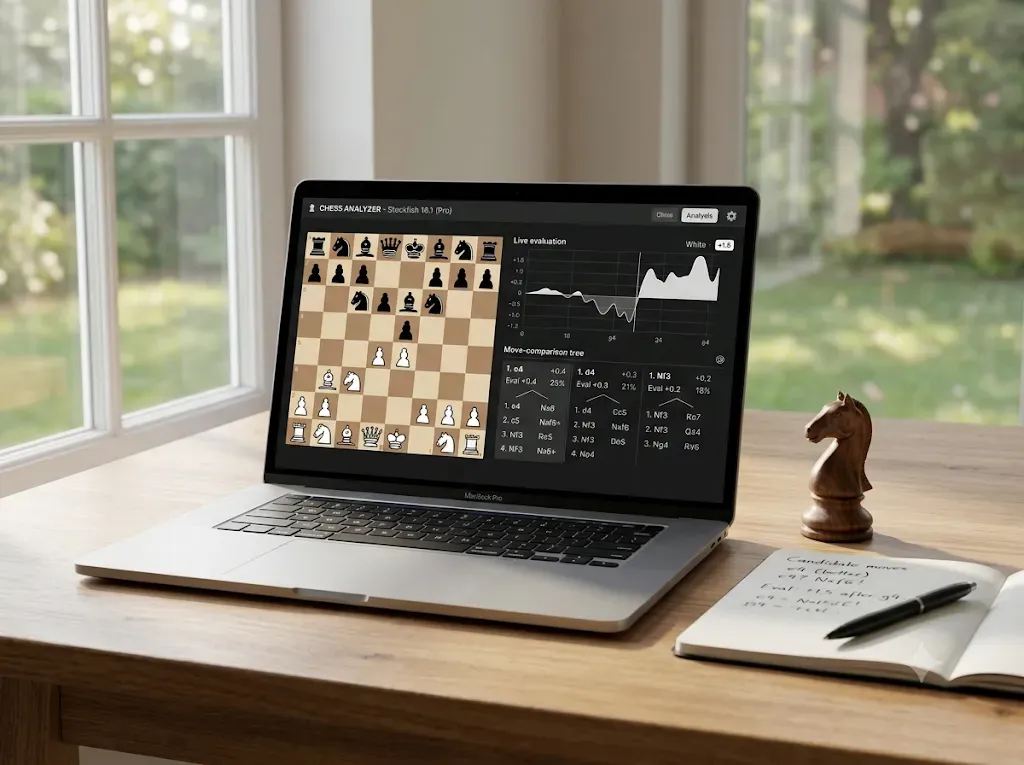
Free chess game analysis is enough for serious study if you use it correctly. You do not need a big subscription to learn from real positions. You need a tool that helps you compare moves, spot patterns, and turn observations into a plan.
That is where a free tool can still be useful. It gives you enough information to prepare better without turning study into guesswork.
What a free analysis tool should give you
At minimum, it should help you:
• inspect a position from a real game
• compare candidate moves
• identify common replies
• understand the resulting structure
If it does those things well, it is already useful.
Use it alongside Free Chess Engine when you want to verify a line, and use Game Explorer when you want a branch view with results.
Why free does not mean shallow
A free tool can still show you the important parts of the position. The value is not in how much it shows. The value is in whether it helps you make better decisions.
The best free chess game analysis workflow is simple:
• Start from a real position.
• Compare the main moves.
• Check the replies.
• Note the resulting plan.
That beats memorizing random lines that you do not understand.
What to watch out for
Some free tools make the wrong things look important. Watch out for:
• too much move clutter
• no clear branch structure
• no easy way to compare plans
• no link between moves and results
If a tool helps you understand why a line matters, it is good enough.
How this helps opening prep
Free chess game analysis is especially useful when you want to know what your opponent might choose after the opening.
That means you can use it to:
• prepare for common responses
• spot structures you know well
• identify where the game becomes tactical or quiet
• choose branches that fit your style
If you also want a broader opening overview, use Study Openings.
How to make it stick
Keep the process small:
• one position
• two candidate moves
• one engine check
• one note about the plan
Do that consistently and the tool becomes part of your repertoire routine instead of a one-off lookup.
The weekly habit
Once a week:
• pick one position from a recent game
• compare the top replies in your analysis tool
• note which branch you would prepare
• save the result for later review
That is enough to improve without over-complicating the process.
Ready to explore?
Ready to explore? Use our free chess opening explorer at Study Free Chess Explorer and make your no-cost study time count.