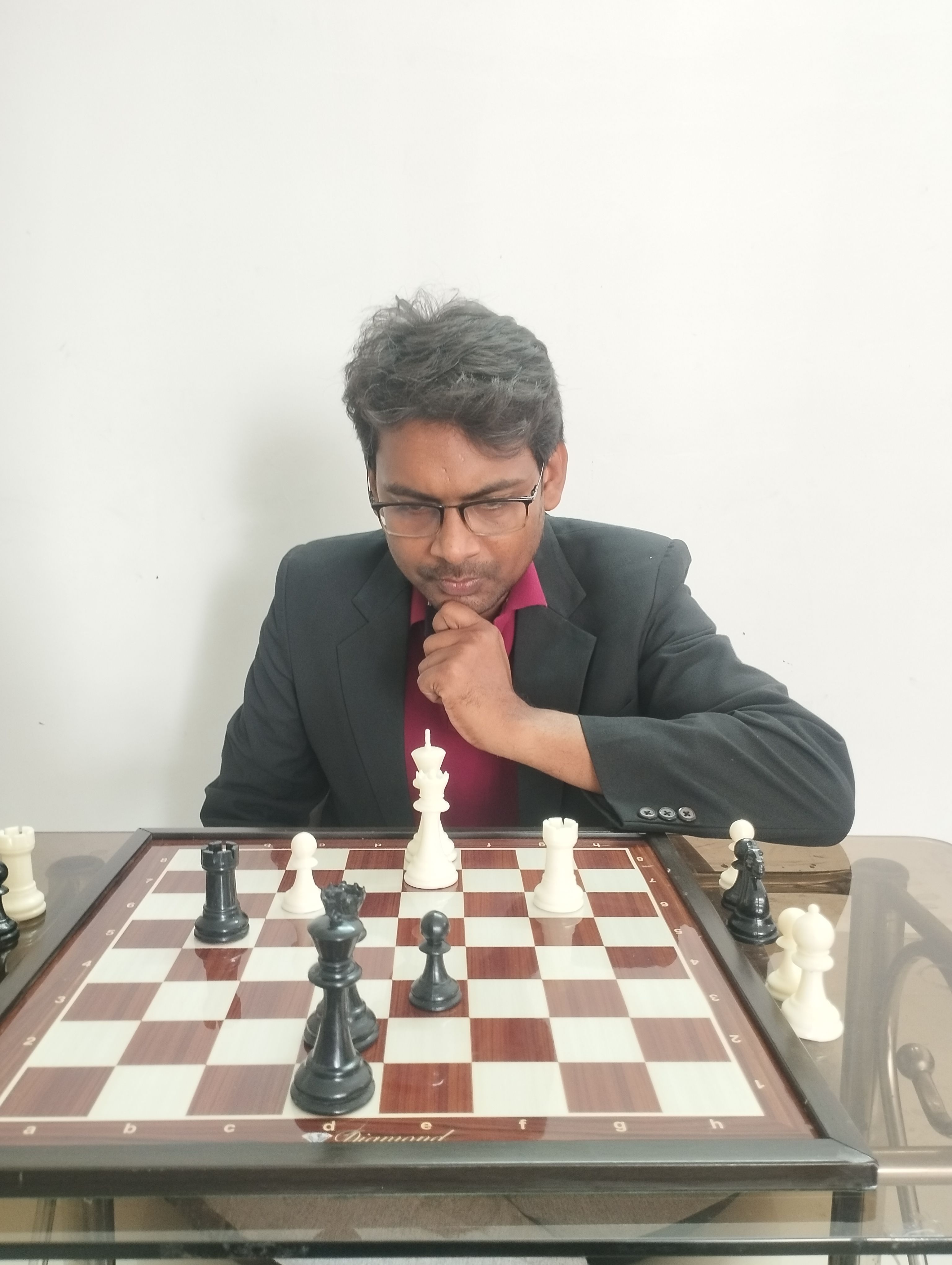
Bodhana Sivanandan has done something that matters far beyond the trophy shelf. At 11, she became the youngest player ever to earn the Woman Grandmaster title, and she also scored her second International Master norm at the 46th Women’s Chess Olympiad in Samarkand. If you are a parent, a junior player, or a club player trying to improve, this is not just a feel-good headline. It is a clean example of how real progress looks: steady results, strong opposition, technical conversion, and repeated exposure to serious events. According to Chess.com's report on the tournament, Bodhana finished on 8/11 and closed with a final-round win that pushed her over the WGM line while also adding the IM norm.
That combination is the reason the story matters. A single brilliant game can go viral and then fade. A norm, by contrast, is evidence that a player can perform at a high level across a full event. Put two of those ideas together and you get a profile of a player who is not just talented, but increasingly reliable under pressure.
For families trying to understand what to value, that reliability is the lesson. For juniors, it shows what happens when you keep playing strong fields instead of only easier ones. For improving club players, it is a reminder that technique wins norms, not hype.
What happened in Samarkand
Bodhana’s Samarkand run was impressive for more than one reason. She played on England’s top board, scored 6 wins, 4 draws, and only 1 loss, and showed the kind of practical chess that earns results in long events. Her final-round win over Janelle Mae Frayna sealed the WGM title and also gave her a second IM norm. That is the sort of finish strong players build toward: not just surviving the event, but peaking at the end.
She had already completed the final WGM norm before the last round, which means the last game was not about chasing the title from scratch. It was about turning a strong tournament into a historic one. That distinction matters. Many players can play one good stretch. Very few can keep their nerve when the last round still matters.
The bigger picture is even more striking. Bodhana has been collecting milestones for years: youngest player to achieve the WIM title, youngest girl to score a WGM norm, youngest girl to score an IM norm, and now youngest-ever WGM. This is not a random burst. It is a long line of incremental achievements that keep stacking.
Why the WGM title and IM norm both matter
Titles in chess can confuse people outside the game, so it helps to separate what happened. The WGM title is a major achievement in women’s chess and a landmark for age records. The IM norm is a different kind of proof: a performance standard showing she can compete at near-IM level in a strong field. Together, they tell us two things at once.
First, Bodhana is already operating at an elite junior level. Second, her ceiling may still be moving upward. That is why this story is bigger than a single record. The title says she has crossed one threshold. The norm says there is still more to come.
For parents, this is the part to notice. A child’s chess development is rarely linear. One tournament may be a breakthrough, but the real signal is consistency over time. Look for habits that scale: good prep, calm decision-making, and the ability to recover from mistakes. Those traits travel better than any one result.
For juniors, the message is simple: titles are earned by repeated performance. You do not get there by hoping for one perfect event. You get there by being ready for the next event, then the one after that.
What parents should take from Bodhana’s rise
If you are a parent watching your child play chess, Bodhana’s rise offers a useful filter. Do not fixate only on rating spikes or one-off trophies. Pay attention to whether your child is getting used to serious competition. Bodhana did not become the youngest-ever WGM by avoiding hard games. She got there by playing them, learning from them, and coming back to the board.
That does not mean pushing a child too hard. It means choosing the right kind of challenge. Kids improve when the event is hard enough to stretch them but structured enough that they can still learn. Long time controls, regular review, and exposure to stronger opponents are often more valuable than constant blitz or random online grind.
It also means protecting the process. The best junior progress is usually boring from the outside: steady training, rest, review, and another tournament. If your child enjoys chess, the goal is not to turn every event into a referendum on talent. It is to build a habit of returning to the board with curiosity intact.
What juniors can copy right now
Bodhana’s story is inspiring, but juniors need concrete habits, not just inspiration. Here are the parts worth copying.
First, value technical endgames. Her final-round win was decided with good practical play, not fireworks. That matters because endgames teach conversion, patience, and accuracy under pressure. If you can turn a small edge into a full point, you become dangerous fast.
Second, play stronger fields when possible. Ratings improve when you are tested. Norms come from performing against serious opposition. You do not have to chase every elite event, but you should not hide from every tough one either.
Third, review every game honestly. The best juniors are not the ones who never blunder. They are the ones who identify patterns in their mistakes and fix them quickly.
Fourth, treat preparation as part of the game. Opening knowledge matters because it saves energy for the middlegame and endgame. If you want a place to build that habit, our free chess opening explorer is a useful starting point.
What improving club players can learn
Club players sometimes look at prodigy stories and think they are irrelevant. They are not. The standard is different, but the training logic is the same.
Bodhana’s performance is a reminder that chess improvement is cumulative. If your openings are messy, your middlegame plans will be harder to find. If your endgames are shaky, good positions will slip away. If you do not review games, the same errors will keep returning.
So what should a club player do with this story? Start by tightening the basics. Build a small, reliable opening repertoire. Study common pawn structures. Practice rook and queen endgames. Learn how to convert an extra pawn, then an extra piece, then a winning attack into a clean point.
If you want to study positions instead of only memorizing moves, use our opening explorer to look at common setups and typical plans. That is more useful than trying to memorize every line in isolation.
And if your issue is not the opening but the finish, spend time in our endgame trainer. Bodhana’s story is a good reminder that many important games are decided after the tactics are gone and technique begins.
The real lesson is process
The easiest mistake in coverage like this is to reduce everything to age. Age matters because the record is historical. But progress is not magic. It is repetition with purpose.
Bodhana’s rise shows what happens when talent is paired with exposure, discipline, and the willingness to play through the full complexity of real tournaments. That is a lesson for everyone: parents managing a child’s development, juniors deciding how to train, and club players deciding what to work on next.
If you want the shortest possible takeaway, it is this: focus on repeatable habits, not just highlight moments. Win the endgame. Study the opening. Review the loss. Enter the next event ready.